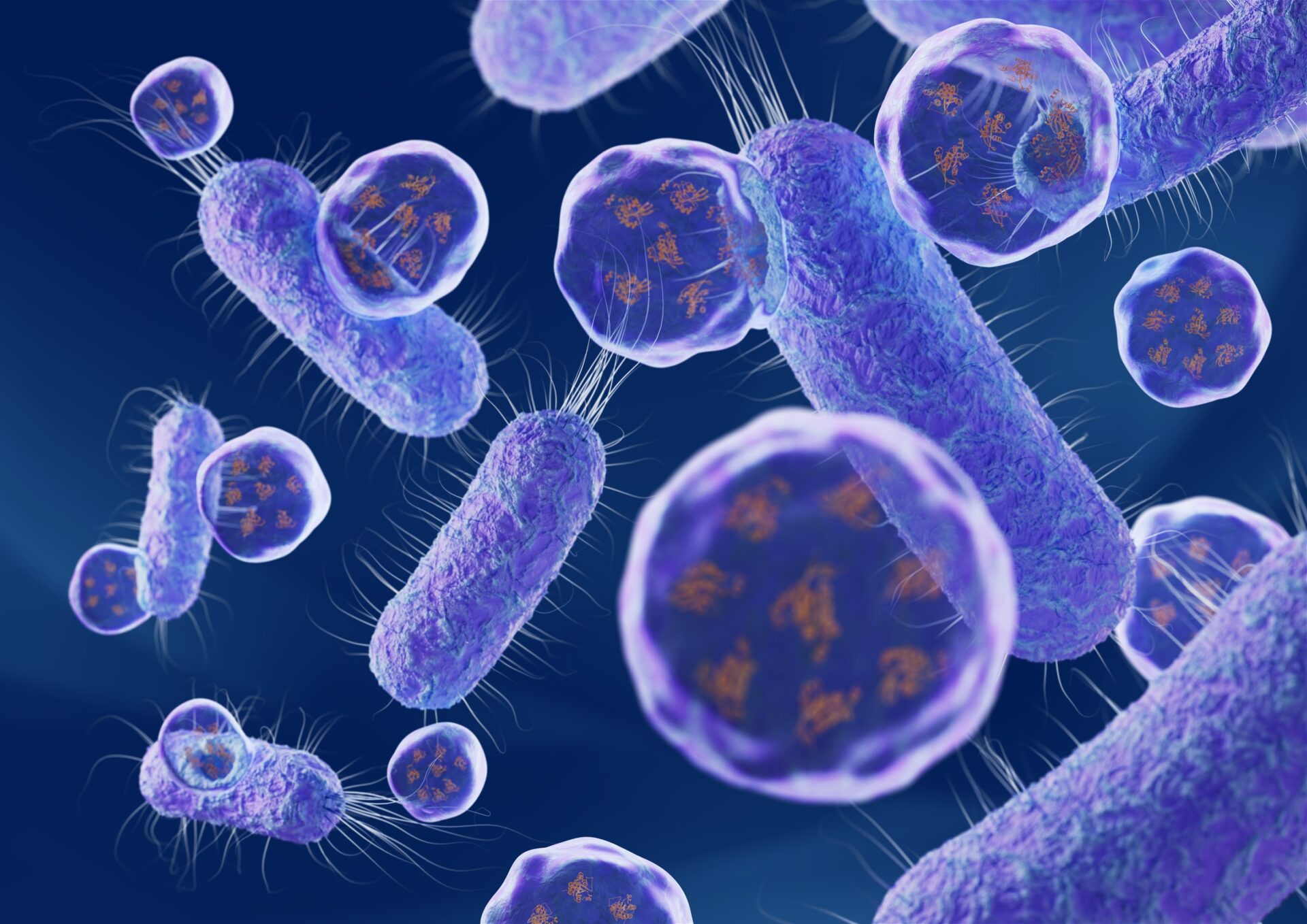
We have developed a recombinant protein expression system which dramatically reduces the cost of protein production, including antibodies and DNase.
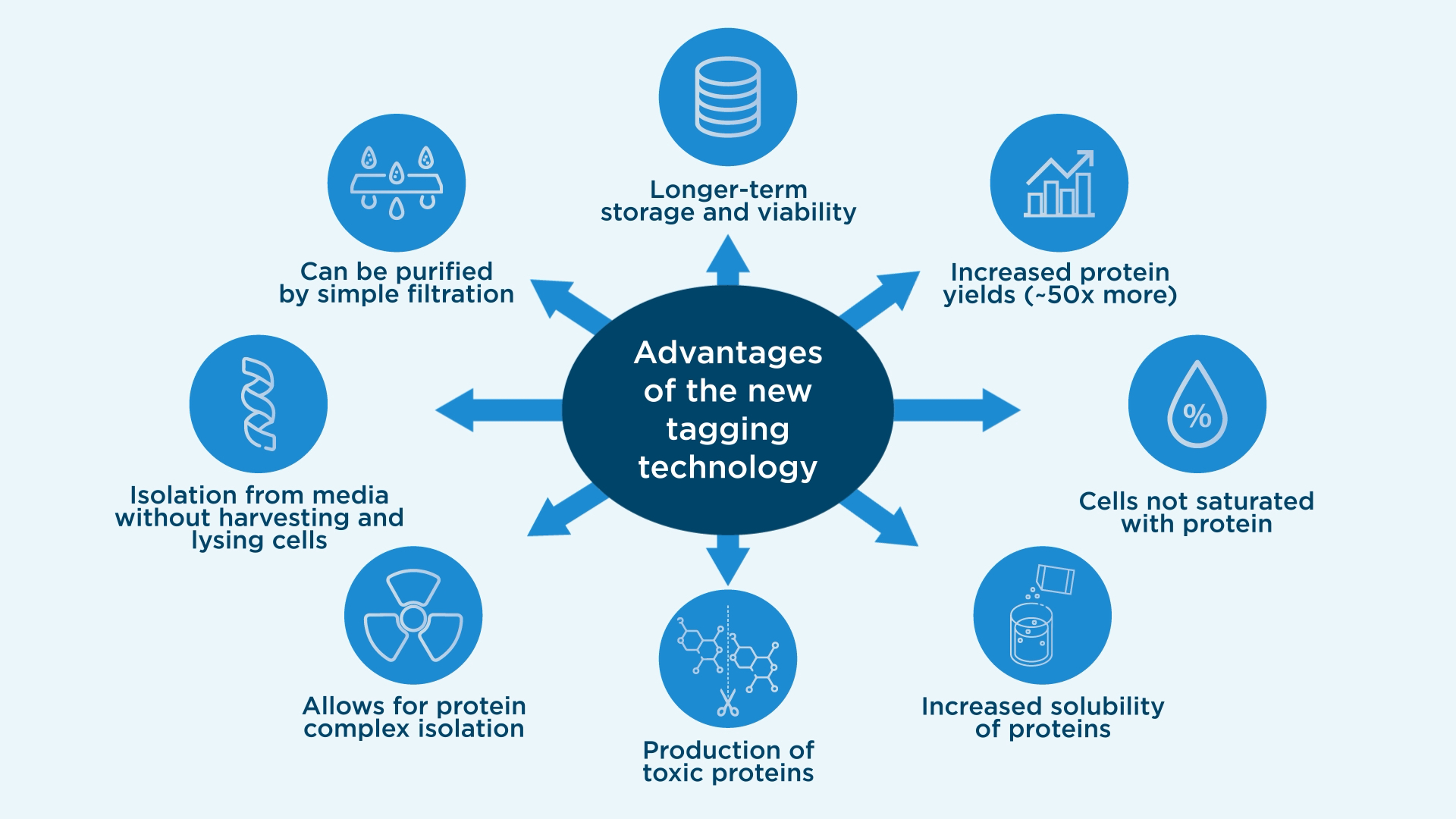
Our Vesicle Nucleating peptide (VNp) system can be used to express around 50 times more recombinant protein in bacteria than previous systems. It also allows for the production of proteins which were previously impossible to express in bacteria, including protein complexes, such as antibodies, and proteins which are toxic to bacteria, such as DNase. All of our published plasmids are available on addgene for academics and nonprofits.
How it works
This system is simple to use and only requires basic microbial culturing facilities. Our system makes the in-laboratory production of proteins such as antibodies a viable alternative to externally sourced and expensive products.
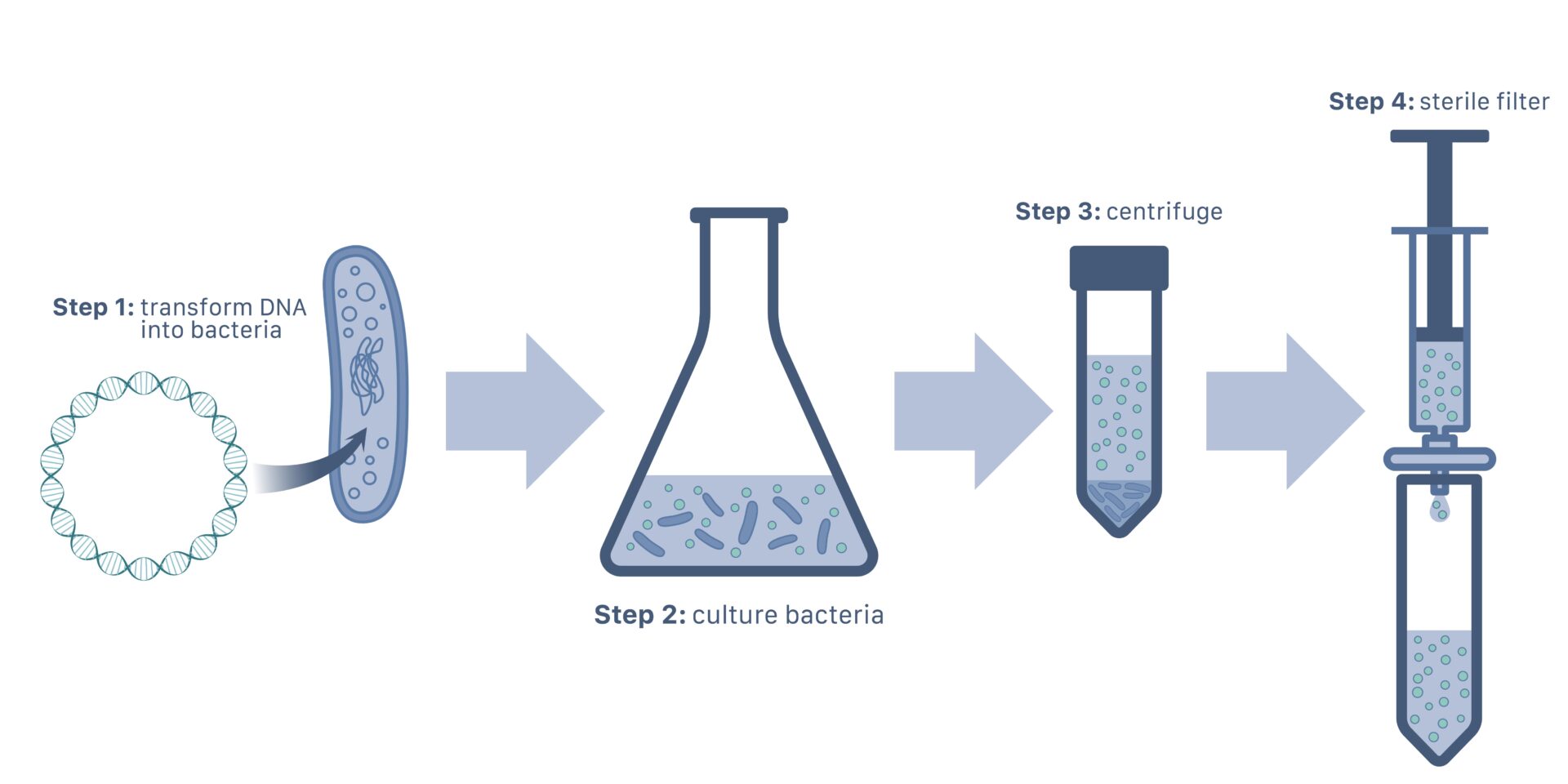
Our technology involves adding a short sequence to your protein of interest, which causes it to be exported inside vesicles. Once the DNA encoding for your protein has been cloned into a plasmid containing our VNp DNA sequence, the plasmid is transformed into E. coli bacteria. After induction and overnight culturing, the cells can be removed by centrifugation and the supernatant containing the vesicles is sterile filtered. In this form the protein is stable at 4℃ and can be stored for months on end.
A detailed protocol and video on using our technology is available on JOVE.
Our plasmids
We have developed several versions of the VNp sequence, which are suited to different circumstances. Read our paper to find out more.
- VNp6: our main go-to sequence, suitable for the production of a wide range of proteins. It produces optimal yields and can also be used at a wider range of temperatures than our other VNp sequences. Order on addgene: pRSFDuet-1_VNp6-mNeongreen.
- VNp15: this is our shortest VNp sequence, while not as good as VNp6 it also produces high yields. Order on addgene: pRSFDuet-1_VNp15-mNeongreen.
- VNp2 (also referred to simply as VNp): this version is sometimes optimal for expressing more challenging proteins*. Order on addgene: pRSFDuet-1_VNp-His6.
*If you are unsure which VNp to use, we recommend starting with VNp6.
All of our plasmids are available for academics and nonprofits on addgene, with new ones added regularly. Most of our VNp plasmids include fluorescent tags. We also have several VNp plasmids available which already contain DNA for certain proteins of interest, including DNase and uricase.
Applications
We are interested in the potential of our system for in-vesicle experiments and are in the process of developing new techniques based on our VNp technology. One of theses techniques is a methodology for high-throughput screening which we originally developed for rapid optimisation of conditions for the VNp system. This process can be adapted for a wide range of applications, including ligand binding or inhibitor screens, expression libraries, drug discovery, protein engineering and much more. Read the paper in Current Protocols.
The VNp system in practice
Our technology has been used to express a range of proteins which are usually difficult or impossible to produce in E. coli. We have used the VNp system to express recombinant protein complexes, such as BifC; complexes containing disulphide bonds, including monoclonal antibodies; enzymes such as uricase and proteins which are toxic to bacteria, such as DNase.