Tuesday 10th March 2026, 6.30pm, Sibson Lecture Theatre 3
Alex McDowell
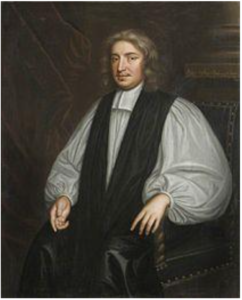
Many think that the French invented the metric system, but Englishman Bishop John Wilkins invented it over 120 years earlier. Wilkins’ system was almost identical to the SI (le Système International d’unités) we use today, apart from the units’ names and his standard unit of length was close to one metre. Units of volume were cubic units of length – like the litre is defined as a cubic decimetre; units of mass were defined as unit volumes of water – like the kilogram was originally defined as the mass of a litre of water.
Wilkins’ system was one of the first practical systems that avoided defining units in terms of prototypes. Although the metric system we use today is of French origin, the British made great contributions to it. The candela was derived from the candle-power unit, which was a British invention; the lumens given on lightbulb packaging are derived from the candela. The kelvin was also a British idea.
Frenchman, Gabriel Mouton is often regarded as the father of the metric system because he proposed a decimal system for units of length, two years after Wilkins published his system. The speaker will cover how the French derived the SI units that we use today.
Many believe that the EU imposed the metric system on the UK and that they outlawed the use of pounds and ounces, but these are just myths! The UK government initiated the switch to metric in 1965 – eight years before we joined what is now the EU! It was foreign invaders who imposed imperial units – for example the Romans imposed feet, inches, miles pounds and ounces.
About the speaker
Alex McDowell has supported the public lecture series organised by the London and South East branch of the Institute of Physics for more than 20 years, and is currently the press officer for the UK Metric Association.
The talk is free and open to all. Doors open about half an hour before the talk begins.
For directions to the lecture theatre, see here. Parking on campus is free at this time.
Registration is not required – just turn up. However, if you do want to register, you can do so at the Institute of Physics event page (link to be added when page is live)