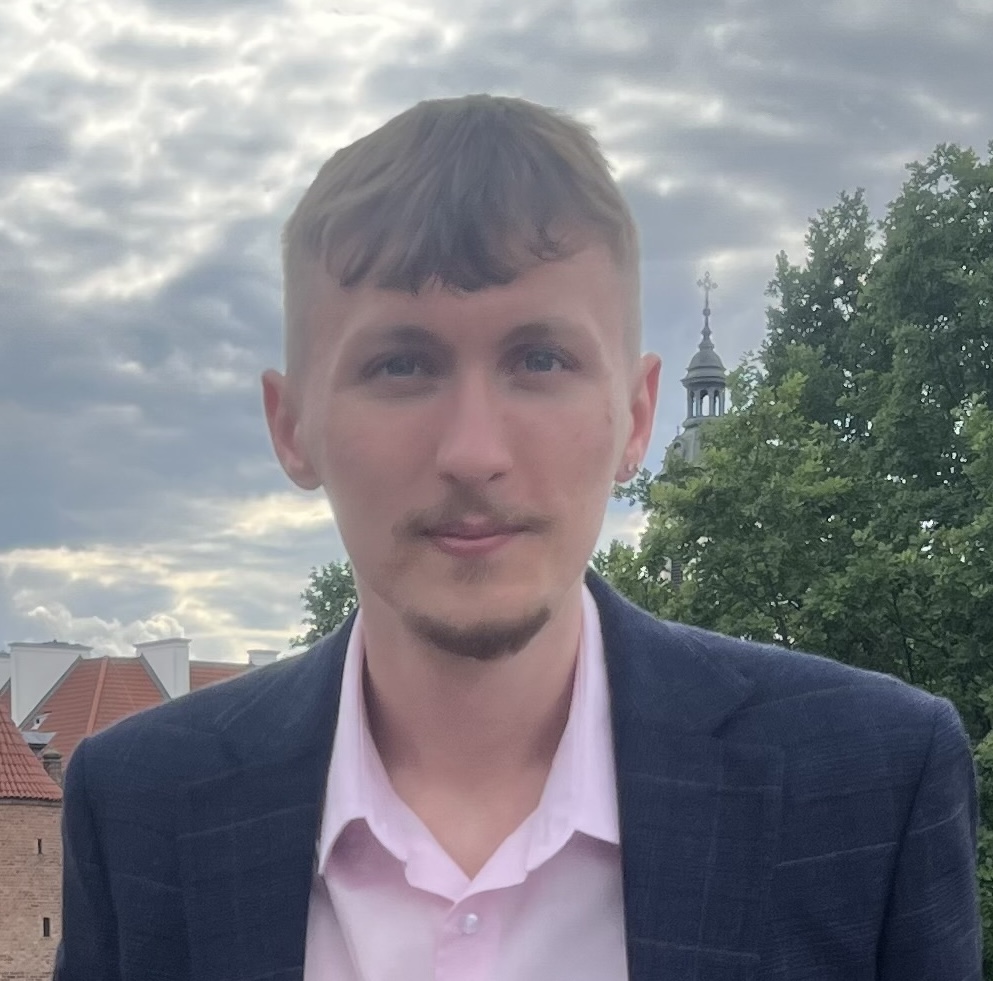
Kacper Leon Wiatrowski
About
I am a PhD candidate at the University of Kent. I was born in Poland and moved to England in my early childhood. My academic journey began in 2018 when I decided to act upon a long-standing interest in philosophical debate by picking up several books from classical authors including Bertrand Russell and Friedrich Nietzsche. Exploring these writings helped stimulate my desire for knowledge which ultimately led to me starting my BA in Philosophy at the University of Kent. Throughout my undergraduate program, I excelled at debate-style dialogue, where I find myself most comfortable. I enjoy pushing others with challenging questions and working around dilemmas when they are presented to me. During this course, I studied core philosophical modules like logic and reasoning, metaphysics and ethics. These deepened my technical understanding of argumentation and critique, which gave me foundational skills that I use to this day. My BA also allowed me to sample modules from multiple different disciplines where I found pleasure in exploring psychology, theology and sociology. Through my module on the sociology of mental health, I began to explore the topic that I have persisted with to this day via my writings on American policy and its role in facilitating the ‘opioid epidemic.’
During my Sociology MA, I grew to understand the history and importance of sociology as a discipline, getting an intimate understanding of the great writers in the field and the works of my professors, with whom I often had long and extensive discussions. Since beginning my journey into the sociological imagination, I have grown particularly fond of the works of Pierre Bourdieu and Judith Butler through their works on class and gender respectively. Both these authors have inspired me to look more critically at social discourse particularly as the concepts they explore have had lasting vibrations in sociopolitical discourse.
I built upon my previous work by choosing to investigate the stigmatisation of those with substance use disorders as my dissertation topic. This research project saw me conducting extensive qualitative interviews with addiction recovery specialists from several large UK-based charities. These interviews challenged my understanding of the topic at hand, presenting powerful and emotional narratives from the experiences of those working around substance use disorders. This presented me with an opportunity to practice the highest standard of ethical consideration and analysis. I found this to be a highly compelling experience, one that felt both capturing and grounding in the real day-to-day experiences of a highly stigmatised population. Upon completion, I achieved a first-class grade in both my dissertation and overall degree.
My PhD project, Solving Addiction: How Biotechnology Shapes Our Understanding and Response, seeks to investigate how our epistemic understanding of addiction is challenged by the changing technological landscape. Through empirical research, I aim to expand the core models that describe the interaction between policy, technology and addiction; showing how changes in one can have both normative and epistemic impacts on the other. I hope this project will highlight some core issues faced by those with substance use disorders and present some pathways to alleviating the injustice caused by widespread and systemic misunderstandings around addiction. I will conduct this doctorate under the supervision of Prof Joy Y. Zhang and Dr Jack Cunliffe.
X: @WiatrAcademics