Publications
The work we do is rooted in our team’s strong research and scientific backgrounds. Here are some relevant scientific papers from our Innovation and E3 Teams, with more available on our research profiles.
Spatial conservation planning
- Giakoumi, S., Richardson, A. J., Doxa, A., Moro, S., Andrello, M., … , Smith, R. J., Bastardie, F., Stelzenmüller, V., Possingham, H. P., & Katsanevakis, S. (2025). Advances in systematic conservation planning to meet global biodiversity goals
- Plumptre, A., Hayes, J., Baisero, D., Rose, R., Holness, S., von Staden, L., & Smith, R. J. (2024). Strengths and complementarity of systematic conservation planning and Key Biodiversity area approaches for spatial planning
- Kor, L.., and Diazgranados, M. (2023) Identifying Important Plant Areas for useful plants in Colombia
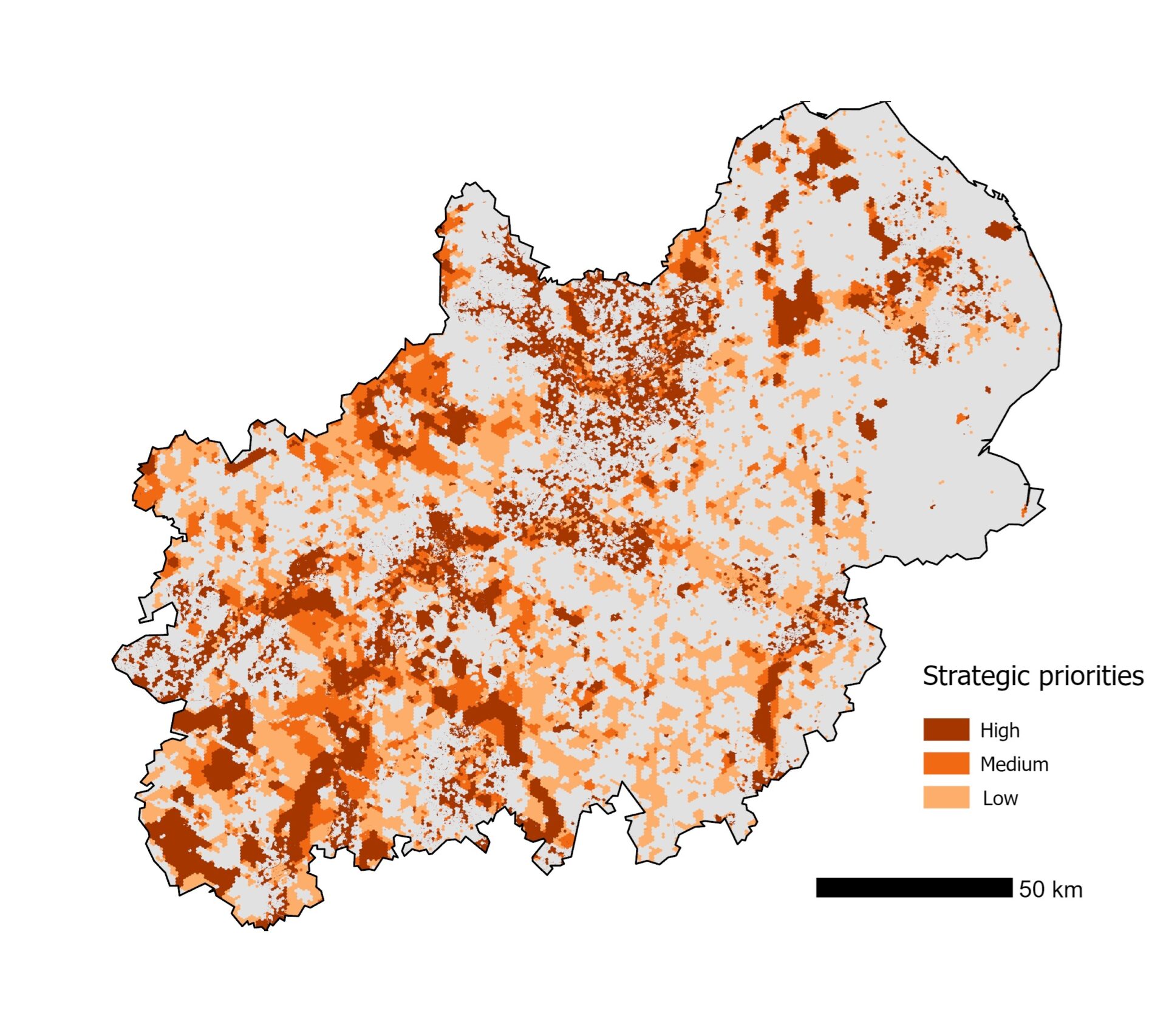
- Smith, R. J., Cartwright, S. J., Fairbairn, A. C., Lewis, D. C., Gibbon, G. E. M., Stewart, C. L., Sykes, R. E., & Addison, P. F. E. (2022). Developing a nature recovery network using systematic conservation planning
- Smith, R. J. (2019) The CLUZ plugin for QGIS: designing conservation area systems and other ecological networks. Research Ideas and Outcomes
Habitat connectivity and remote sensing
- Struebig, M.J., Wenzler, M., Runting, R.K., Law, E., Budiharta, S., Seaman, D. and Kramer-Schadt, S. (2024) Connectivity conservation to mitigate climate and land-cover change impacts on Borneo
- Kor, L., O’Hickey, B., Hanson, M. and Coroi, M., (2022) Assessing habitat connectivity in environmental impact assessment: a case-study in the UK context
- Seaman, D.J.I., Voigt, M., Bocedi, G. et al. (2021) Orangutan movement and population dynamics across human-modified landscapes: implications of policy and management
- Pfeifer M, Kor L, Nilus R, … & Ewers R. (2016) Mapping the structure of Borneo’s tropical forests across a degradation gradient
Nature-based solutions
- Rampling, E. E., zu Ermgassen, S. O. S. E., Hawkins, I., & Bull, J. W. (2024) Achieving biodiversity net gain by addressing governance gaps underpinning ecological compensation policies
- Fisher, J. C., Dallimer, M., Irvine, K. N., Aizlewood, S. G., Austen, G. E., … and Davies, Z. G. (2023). Human well-being responses to species’ traits
- Kor, L., Homewood, K., Dawson, T.P. and Diazgranados, M. (2021) Sustainability of wild plant use in the Andean Community of South America
- Holland J, Douma J, Crowley L, James L, Kor L, Stevenson D, Smith B (2017) Semi-natural habitats support biological control, pollination and soil conservation in Europe
Community-based conservation
- Kor, L., Fernández-Lucero, M., Granados Flórez, D.A., Dawson, T.P. and Diazgranados, M. (2024). Bridging local and scientific knowledge for area-based conservation of useful plants in Colombia
- Morgans, C. L., Jago, S., Andayani, N., Linkie, M., Lo, M. G., Mumbunan, S., … and Struebig, M. J. (2024). Improving well‐being and reducing deforestation in Indonesia’s protected areas
- Lo, M.G., Morgans, C.L., Santika, T., … Davies, Z.G. and Struebig, M.J., (2024). Nickel mining reduced forest cover in Indonesia but had mixed outcomes for well-being