Cognitive Robotics and Autonomous Systems (CoRAS) Lab
Meet our robots
Cognitive Robotics and Autonomous Systems (CoRAS) Lab
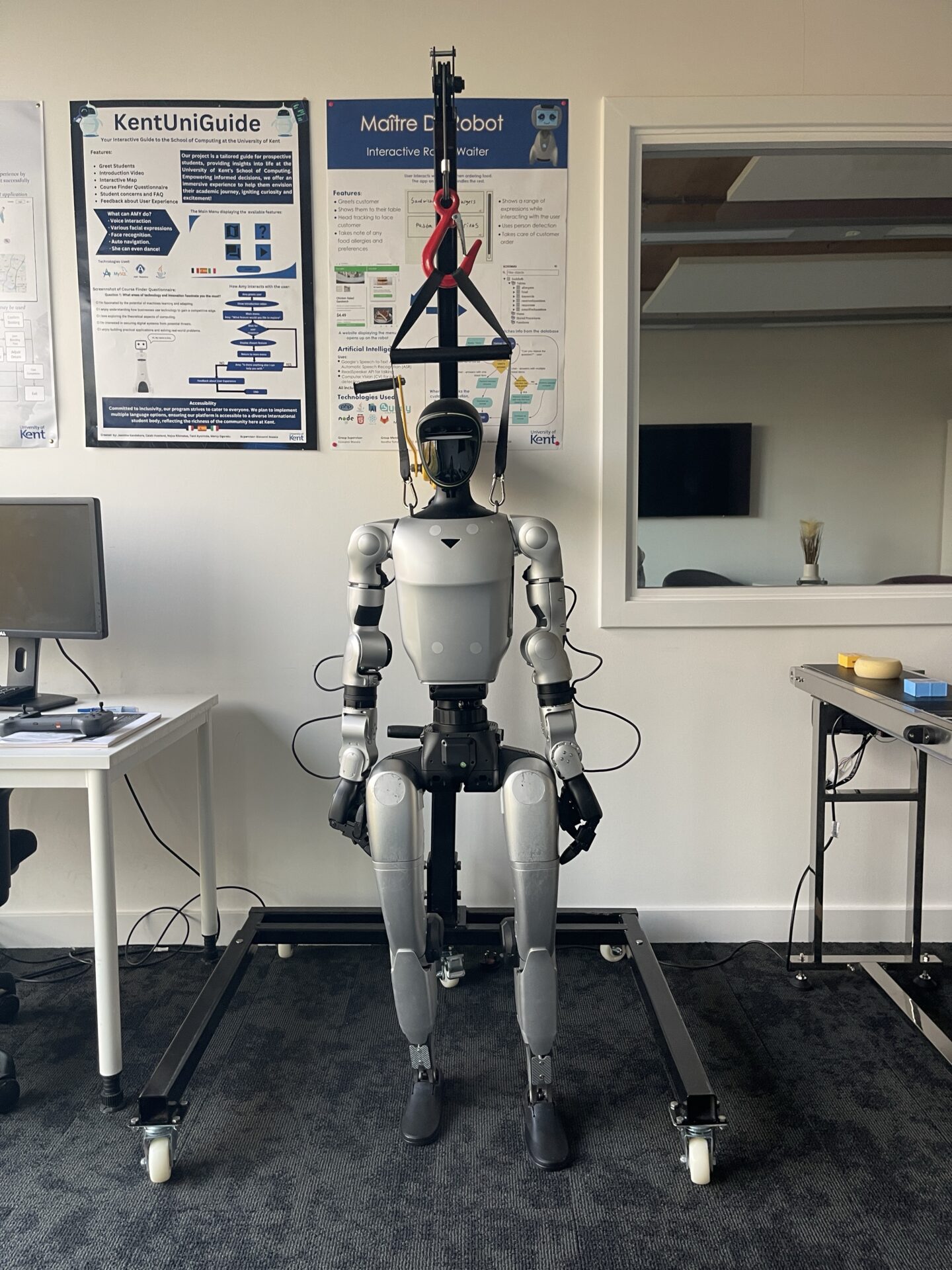
The Unitree G1 Edu Ultimate A humanoid robot is a compact, AI-driven humanoid platform designed for dynamic movement and precise manipulation, equipped with 43 joints for human-like mobility. It integrates learning-based control (imitation and reinforcement learning) with advanced perception through depth cameras and LiDAR for autonomous operation. The robot also features dexterous three-finger hands with force-controlled manipulation.
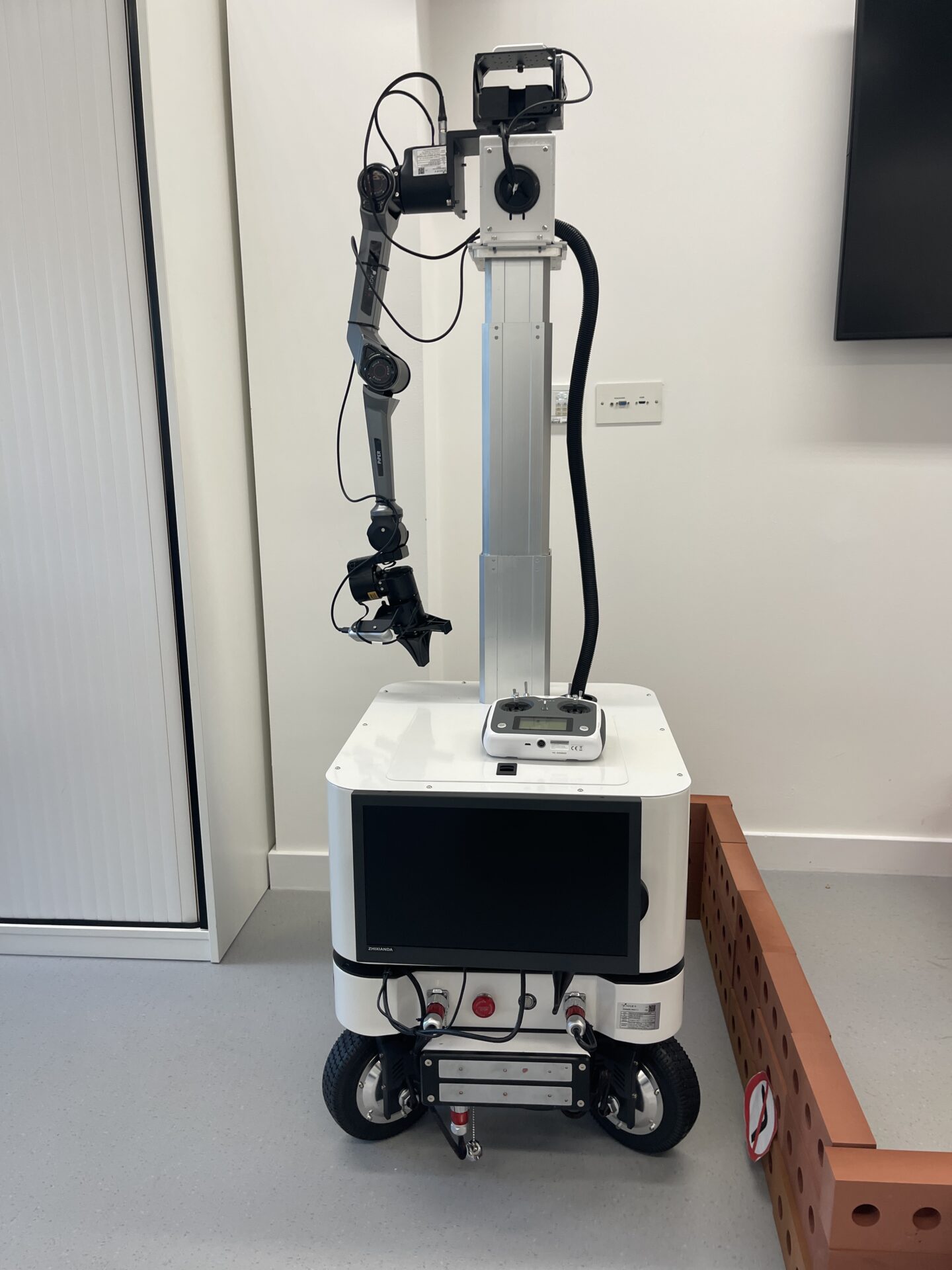
The AgileX Cobot S Kit is a ROS-based mobile manipulation robot that integrates an omnidirectional Ranger Mini 3.0 mobile base, a 6-axis Piper robotic arm with gripper, and a multi-sensor perception system into a single research platform. Designed for embodied AI and robotics experimentation, it supports autonomous navigation, real-time 3D mapping, and object manipulation in dynamic environments, powered by onboard computing for AI workloads.
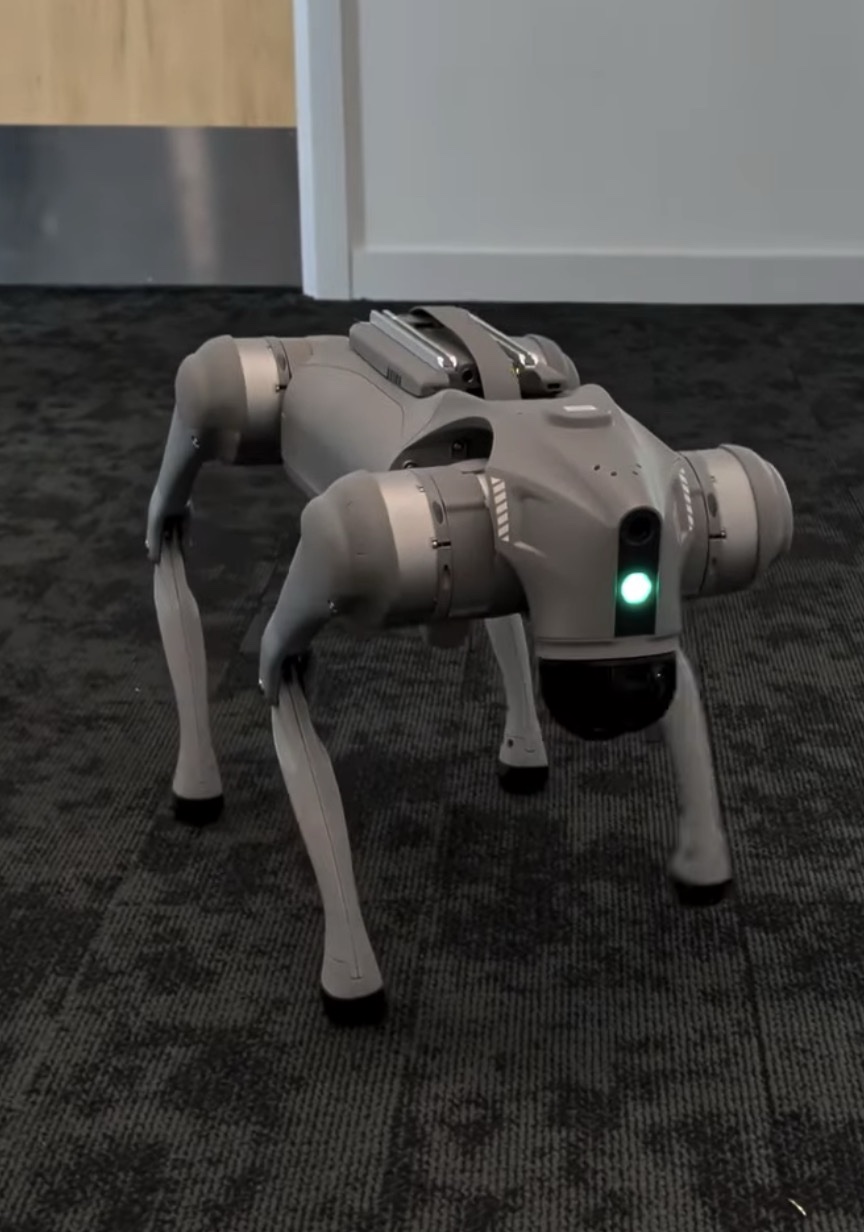
Our Unitree Go2 “Stompy” robot dog is an agile, AI-powered quadruped robot designed for dynamic locomotion and intelligent interaction, weighing around 15 kg and capable of running at speeds of up to 5 m/s. It uses advanced 4D LiDAR and onboard AI to perceive its environment, enabling autonomous navigation, obstacle avoidance, and terrain adaptation, using reinforcement learning to perform complex movements, such as climbing, jumping and stable traversal.
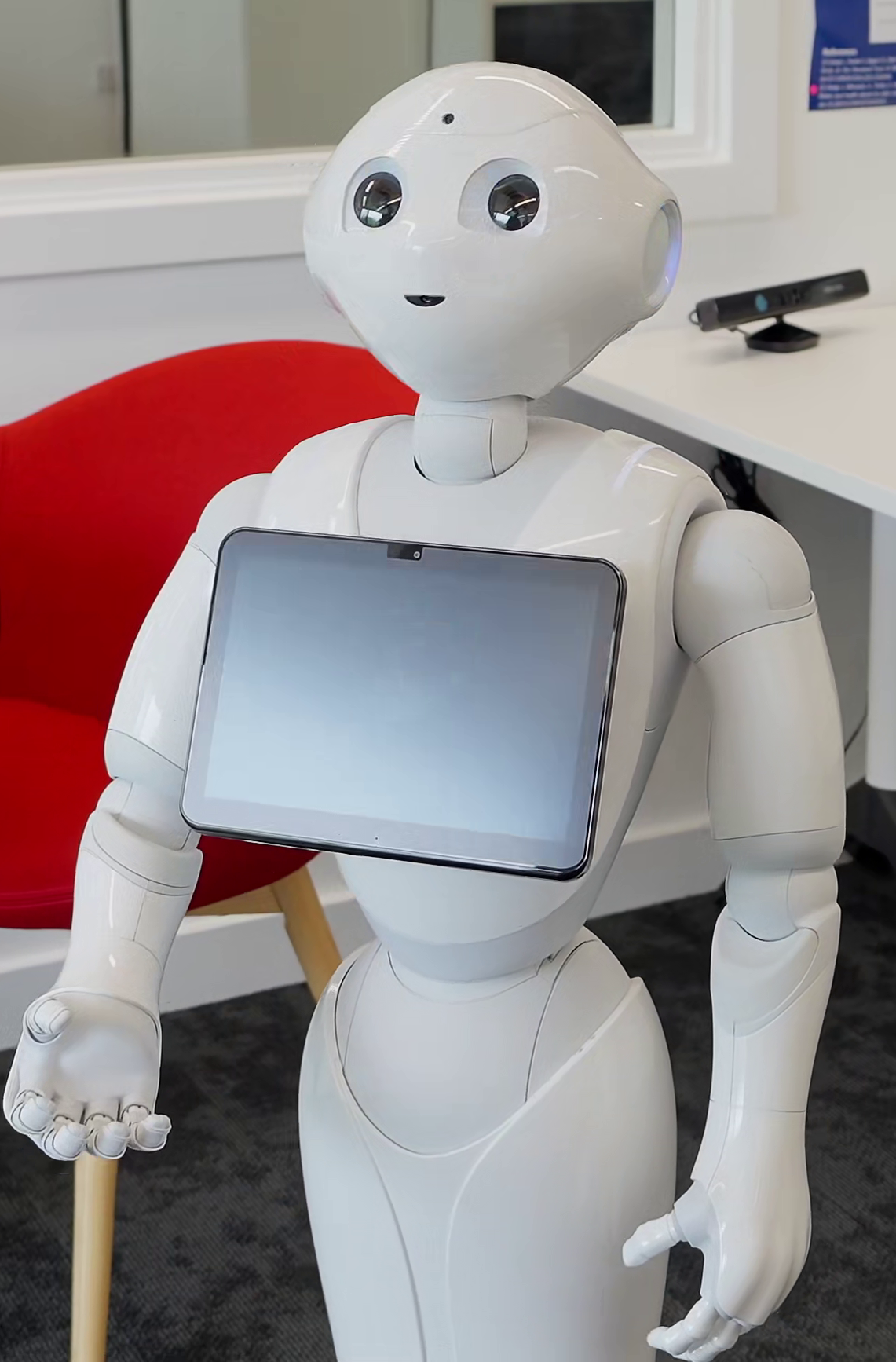
Pepper is a pioneering social humanoid robot developed to facilitate human-robot interaction. Pepper integrates advanced technologies for people tracking and emotion recognition. It is a versatile platform for research and applications in social robotics.
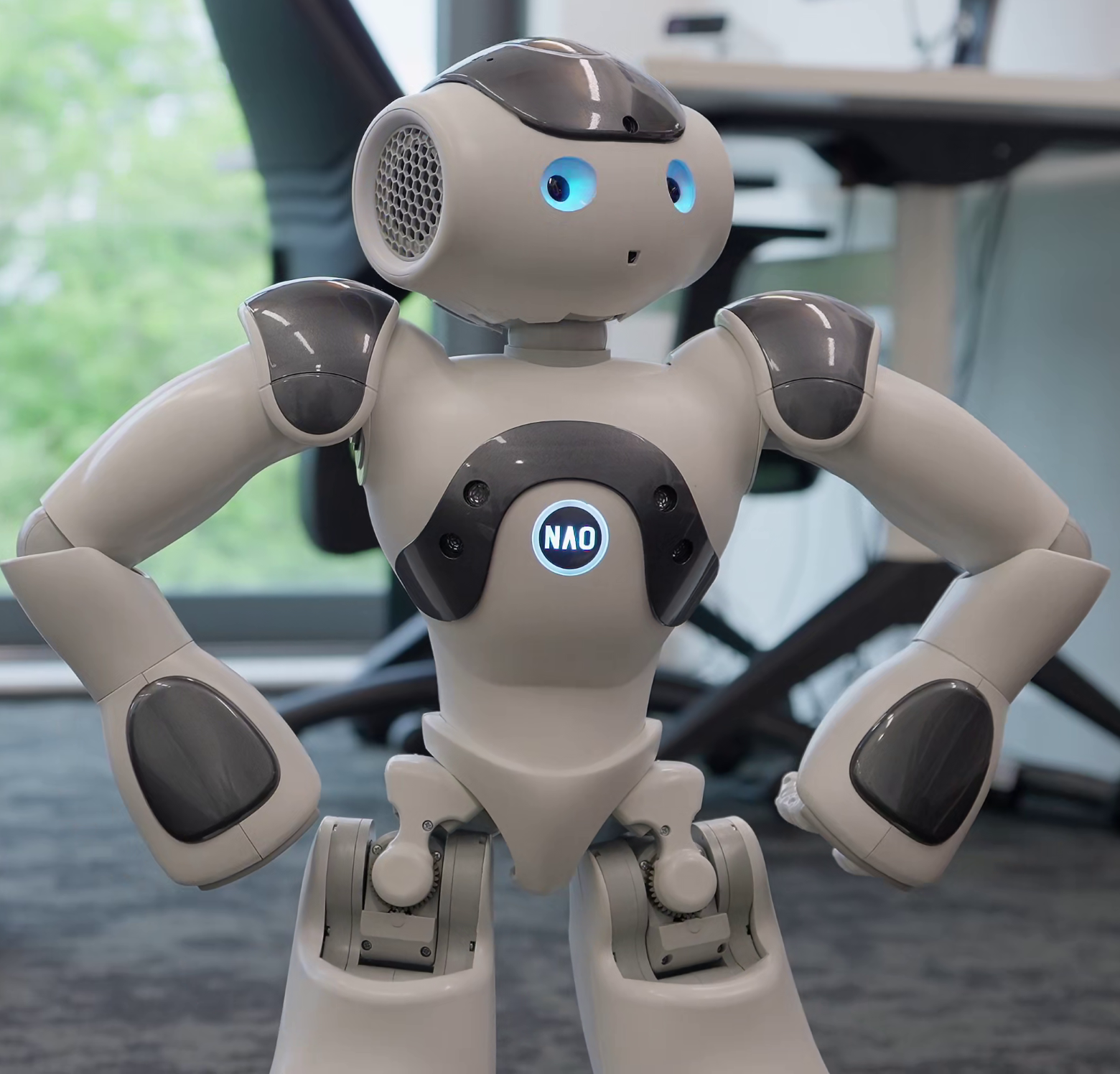
Nao is a small humanoid robot used in research, education, and social interaction studies. It is equipped with sensors, cameras, and microphones to perceive its environment. Nao communicates through speech, gestures, and programmable actions. Its design makes it useful for studying robotics in learning and autonomous behaviour.
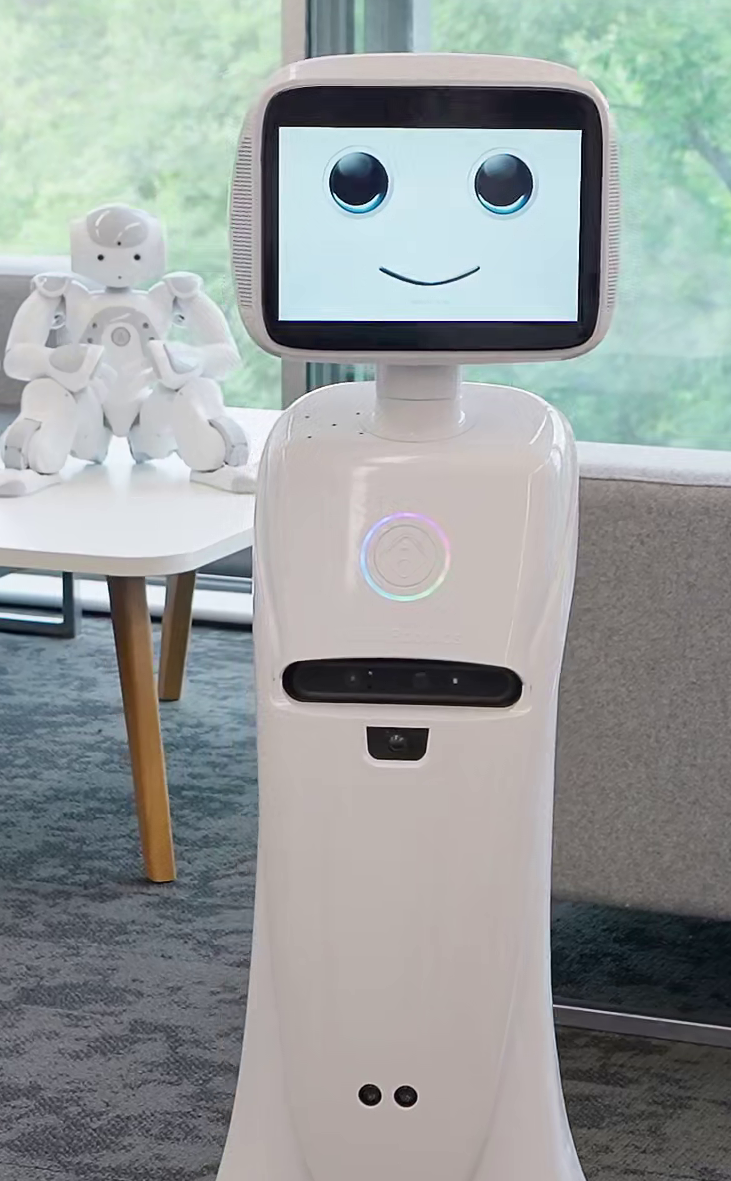
Amy A1 is an android-based service robot designed for interactive and assistive applications. It features advanced speech recognition, autonomous navigation, and multi-mode information display.
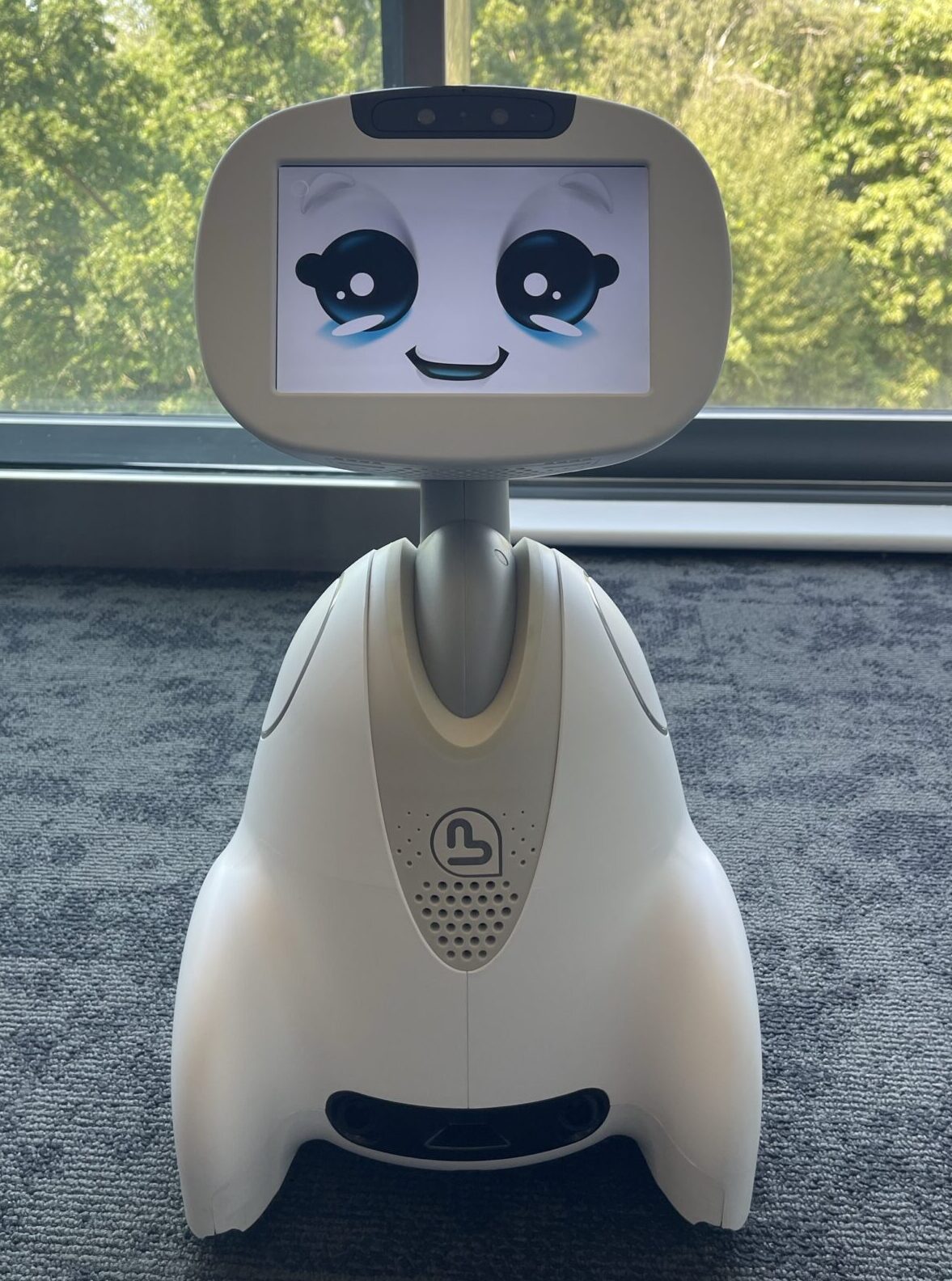
Buddy is an android-based social robot designed to foster connections with its expressive face and ability to display a range of emotions, creating natural and engaging interactions. It serves as a versatile assistant for education, entertainment, and human-robot interaction.
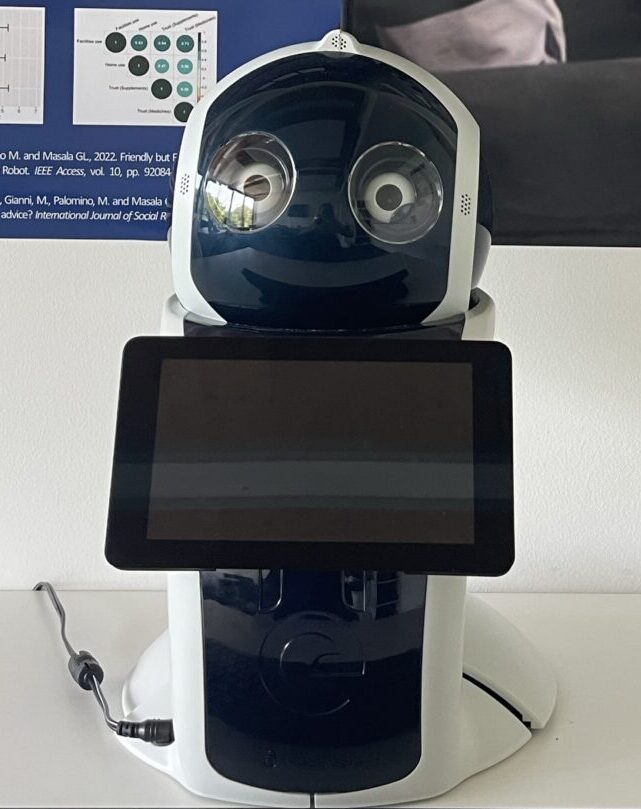
Q.bo One is an open-source robot built on Raspberry Pi and Arduino. It features stereoscopic vision, omnidirectional voice interaction, LED-based speech synchronisation, and touch sensors. It supports both beginner-friendly programming with Scratch and customisation for advanced projects using Python programming.
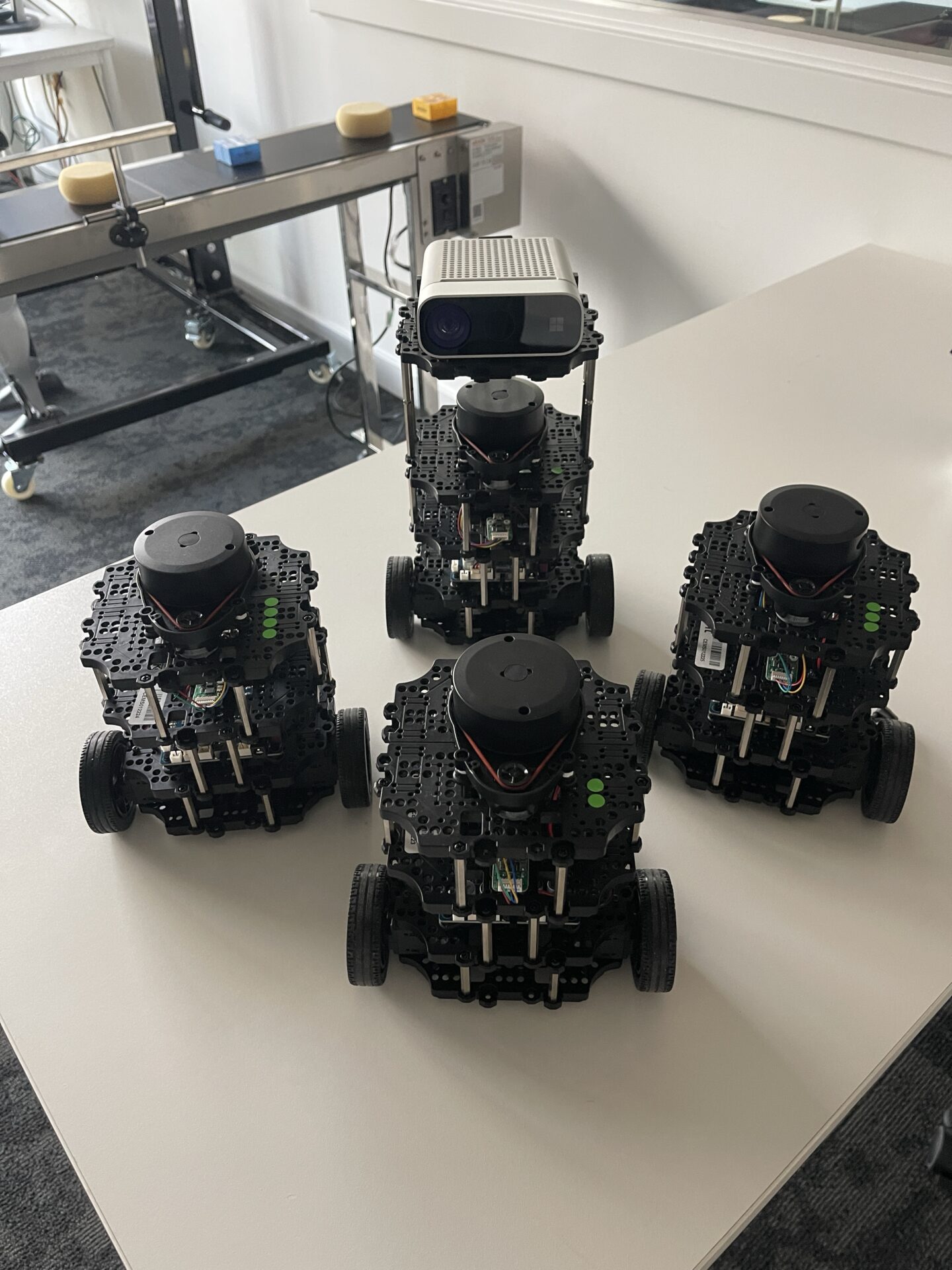
The TurtleBot3 Burger is a compact, affordable, and customisable ROS-based mobile robot. It features LiDAR-based technology supporting SLAM (Simultaneous Localisation and Mapping), autonomous navigation and person-following. Its modular design allows further expansion through additional sensors and computing hardware. Our fleet comprises four TurtleBot3 Burger robots, equipped with LiDAR sensors and augmented with depth cameras, such as the Microsoft Azure Kinect. The lab has three Azure Kinect depth cameras available, enabling enhanced environmental perception and depth-based sensing capabilities.
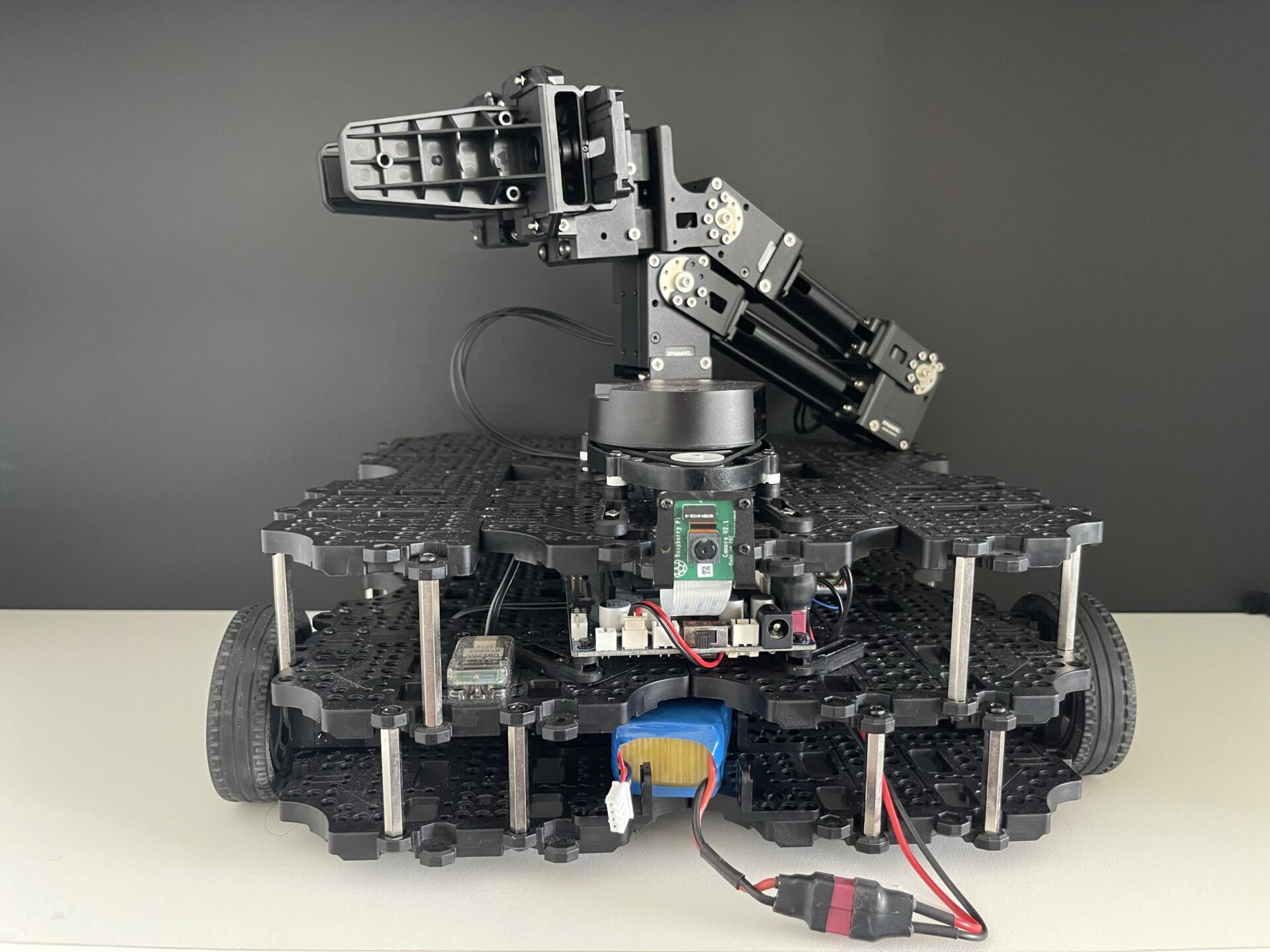
The TurtleBot3 Waffle (Raspberry Pi 4) is a variant of the TurtleBot3 mobile robot, equipped with enhanced features like an RGB-depth camera to support object detection/recognition and feature-based visual SLAM (VSLAM), alongside laser-based SLAM using its 360-degree sensor. Its increased payload capacity enables the integration of an OpenManipulator robotic arm and gripper, enhancing its completeness as a service robot with manipulation functions.
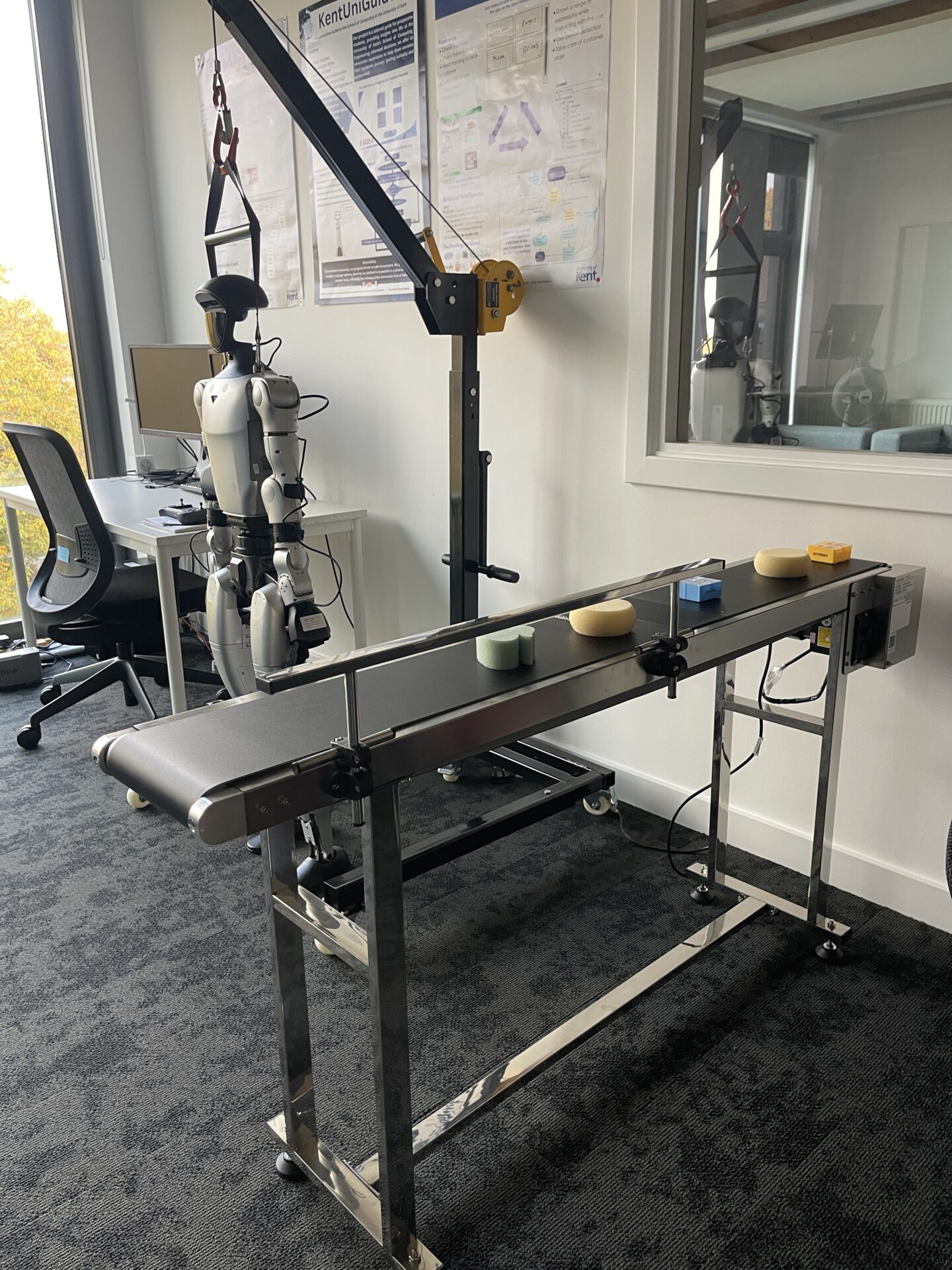
The laboratory is equipped with a motorised conveyor belt system designed to support research and experimentation in robotic manipulation, object detection, recognition and sorting. The conveyor features adjustable side guides to control object movement and maintain alignment along the belt. It can accommodate objects of different shapes, sizes and materials, enabling experiments in visual perception, object tracking, pick-and-place operations and automated sorting. The system can be integrated with robotic platforms (like G1, CobotS)and vision sensors to investigate perception–action coordination and autonomous object handling in dynamic environments.
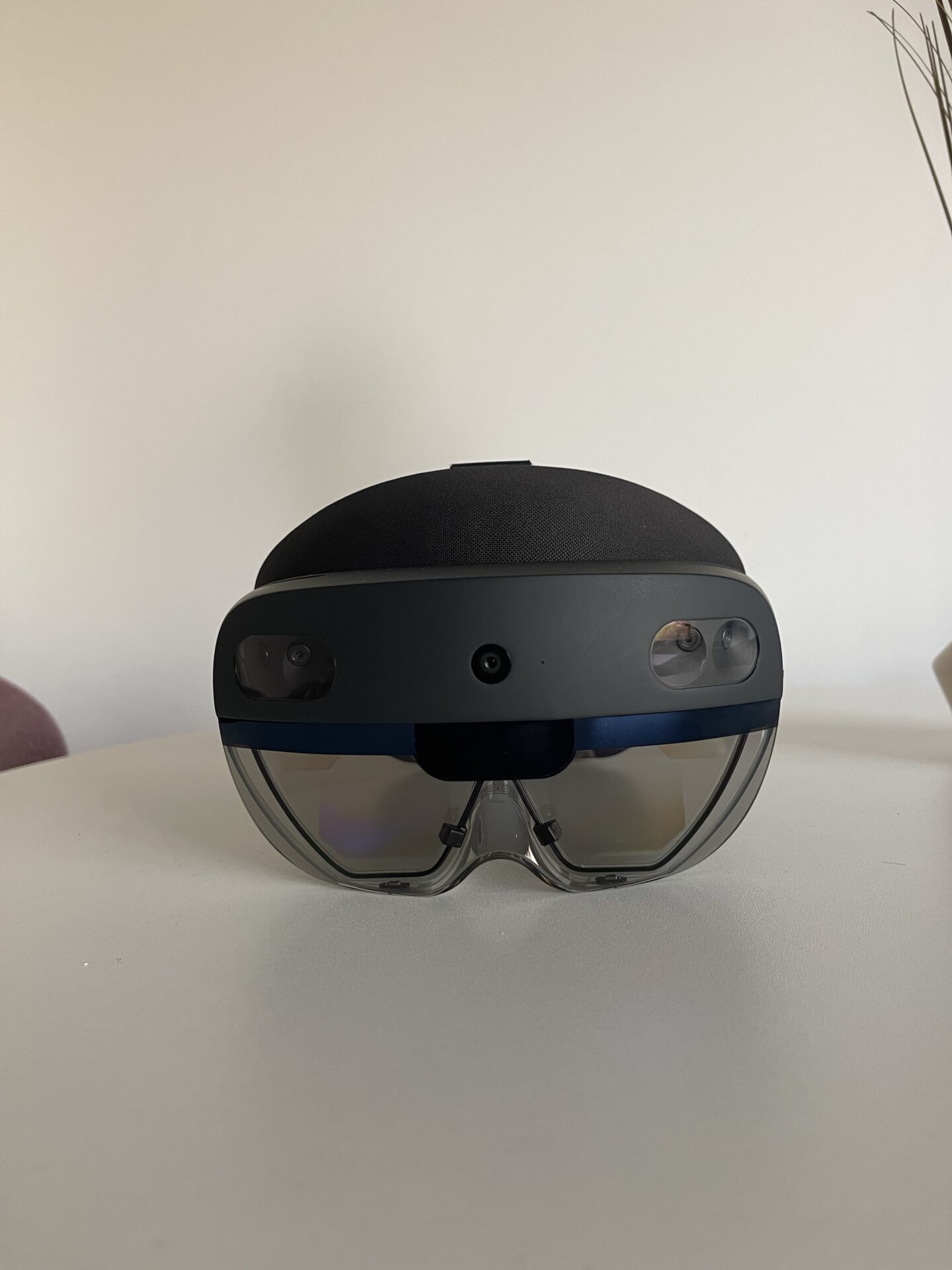
The Microsoft HoloLens 2 is a standalone mixed-reality headset that combines holographic displays with spatial mapping, hand tracking, eye tracking and gesture recognition. It enables users to interact with digital content overlaid onto the physical environment, creating opportunities for human–robot interaction and collaborative robotics research. In robotic applications, it can be used to visualise robot states, trajectories, sensor data and virtual objects within the real workspace, as well as to provide intuitive, gesture-based interfaces for robot control. It also supports the development of mixed-reality scenarios in which humans and robots interact with shared virtual and physical objects, enabling research into human–robot collaboration, teleoperation, task planning and situated interaction.
Active Projects
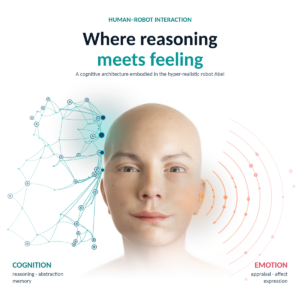
EPSRC Travel Grant: Advancing cognitive architectures for robots via UK–Italy collaboration using Abel
A UK–Italy collaboration between the University of Kent and the University of Pisa to advance cognitive architectures for the hyper-realistic Abel social robot. The work combines Kent expertise in cognitive robotics, language, memory and HRI with Pisa expertise in affective learning, robot communication and access to the physical Abel platform.
The collaboration explores neural-symbolic cognitive systems integrating attention, long-term memory, one-shot learning, language and affective interaction, with a focus on personalised and adaptive support during human-robot interactions.

National Waste and Recycling Robotics Adoption Hub
Consortium
- Kingston University (Lead),
- University of Kent (LASE Group)
- KAPDAA,
- AUTODISCOVERY,
- THE WASTE AND RESOURCES ACTION PROGRAMME,
- Royal Borough of Kingston Upon Thames,
- OPTIMALAI RESEARCH LTD,
- TEXTILE RECYCLING ASSOCIATION LIMITED,
- West London Waste Authority
The project will establish the UK’s first dedicated waste and recycling robotics adoption hub, accelerating deployment of automation in one of the most technically challenging industrial environments.
Despite over a decade of robotics development, fewer than 5% of UK waste facilities have adopted automation. This is not due to lack of technology, but because robotic systems struggle to operate reliably in real-world waste conditions, where materials are heterogeneous, contaminated and often deformable. As a result, operators cannot predict performance, quantify return on investment, or confidently deploy systems.
The hub addresses this gap by enabling robotics systems to be tested, validated and implemented on real waste streams. Initial focus is on complex materials such as textiles, mixed recyclables and soft-material waste, where current systems perform least reliably but where gains in recovery and productivity are greatest.
Using advanced sensing systems, multi-arm robotic sorting cells and digital simulation, technologies will be validated on live contaminated waste streams, generating measured data on classification accuracy, throughput, contamination handling and material recovery. This is combined with site-specific economic modelling to provide payback and investment cases, reducing uncertainty and enabling faster adoption.
Services include:
- Real-world testbeds using contaminated, heterogeneous waste streams, including textiles, mixed recyclables and deformable materials
- Independent benchmarking using operator-specific waste samples, generating measured performance data rather than vendor-derived metrics
- Integration support within Materials Recovery Facilities and legacy infrastructure, including constrained layouts and variable feedstock
- Training and workforce transition programmes focused on safe operation in contaminated waste environments
- Innovation programmes addressing sector-specific challenges such as mixed fibre sorting, contamination removal and automated disassembly
- Access to waste operators, local authorities and commercial facilities, providing direct routes to deployment and live operational validation
Delivered by a consortium of robotics developers, waste operators, local authorities and national bodies, the hub combines real-world deployment with research capability and policy alignment, ensuring solutions are aligned to industry needs, regulatory requirements and scalable deployment pathways.
By replacing assumptions with validated operational data, the hub reduces deployment risk, shortens adoption timelines and enables wider uptake of robotics across the waste sector.
Our conservative target is to support over 150 organisations and deliver operational deployments by 2030, creating a national evidence base for robotics in waste and establishing a scalable model for adoption across other complex industrial sectors.