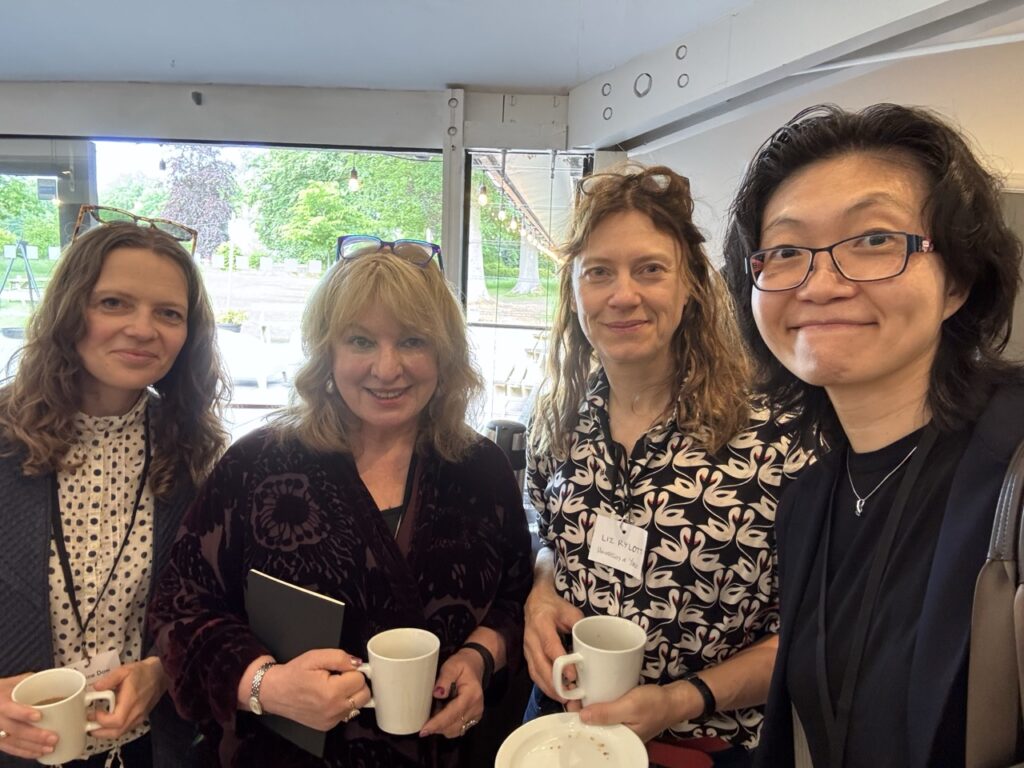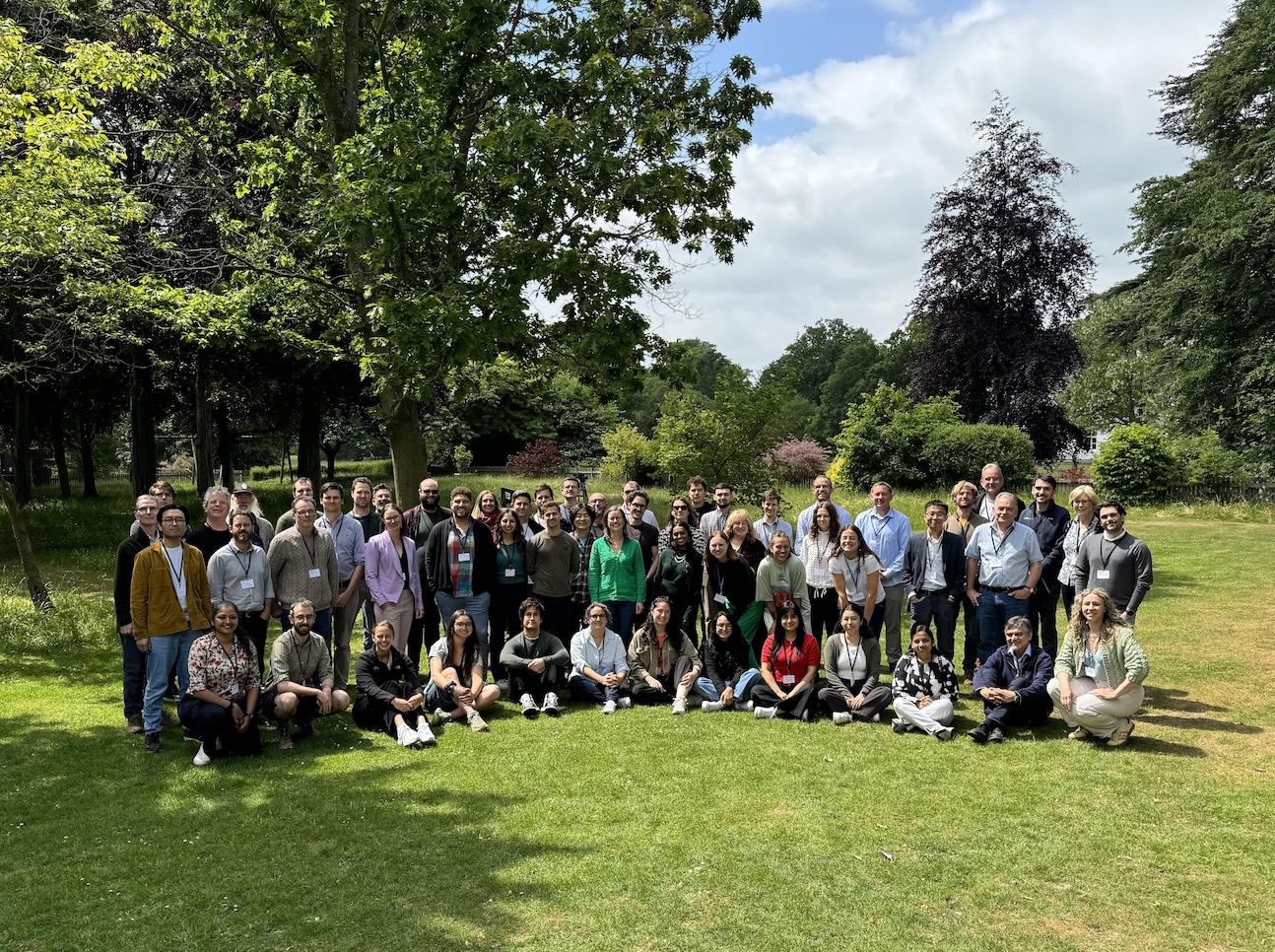
In late May, Dr. Katharine Dow, Professor Lynn Frewer, Dr. Lizz Rylott, and Professor Joy Zhang from Team Futuring joined researchers and collaborators at the ARIA Synthetic Plants Programme Kick-Off event in Didcot.
Over two lively days, the gathering featured lightning introductions, detailed project talks, and creative team-building activities — including two standout sessions led by Sara Olson, as well as a “Future Wheel” workshop facilitated by Rob Smith and Adrian Ely.
It was a fantastic opportunity to meet the seven scientific teams embarking on an ambitious mission: to develop methods for introducing synthetic genetic instructions into the chloroplasts and chromosomes of Solanum tuberosum(the humble potato). These efforts aim to equip crops with enhanced characteristics such as improved yields, more efficient photosynthesis, and greater resilience to environmental stress.
The research teams include:
-
Synplastome 2.0: Creating a Programmable, Synthetic Plastid Genome
Saul Purton, University College London -
From Prototype to Production: Implementing Synthetic Chromosome Technology in Crops
Jake Harris, University of Cambridge -
SyncSol: A Streamlined Platform for Synthetic Chloroplast Genome Assembly in Solanaceous Crops
Daniel Dunkelmann, Max Planck Institute of Molecular Plant Physiology -
OPTIMiSE: Oxford Plastid Transformation for an Improved Sustainable Economy
Steven Kelly, University of Oxford -
Reducing Costs and Iteration Times on Our Way Towards Synthetic Plants
Karen Sarkisyan, Syntato -
A Rapid Method for Construction and Installation of Whole Chloroplast Genomes in Solanum Tuberosum
Bogumil Karas, Western University -
Engineering Synthetic Plant Artificial Chromosomes (synPACs)
Joshua James & Patrick Yizhi Cai, University of Manchester
We were also pleased to connect with the other social science team funded by the programme. The project, “Cultivating Responsible Innovation for Plant Synthetic Genomics Through Experimental Governance”, is led by Dr. Robert Smith at the University of Edinburgh and brings together an experienced and thoughtful group of collaborators: Sarah Hartley (University of Exeter), Adrian Ely (University of Sussex), Joana Formosinho (University of Edinburgh), Sophia McCully (Nuffield Council on Bioethics), Sandra Knapp (Natural History Museum), and Alexandra Davet (Royal Botanic Garden Edinburgh).
This event marked an inspiring start to what promises to be a bold and boundary-pushing programme. As scientific and social teams continue to shape the future of synthetic plants, we’re excited to contribute to a collaborative vision that is as thoughtful as it is innovative.
Here’s to a greener, smarter, and more resilient future — one potato at a time.